
The Bill of Rights: A Living Legacy of American Freedoms |
Exploring the enduring impact of the 1791 amendments on civic engagement today |
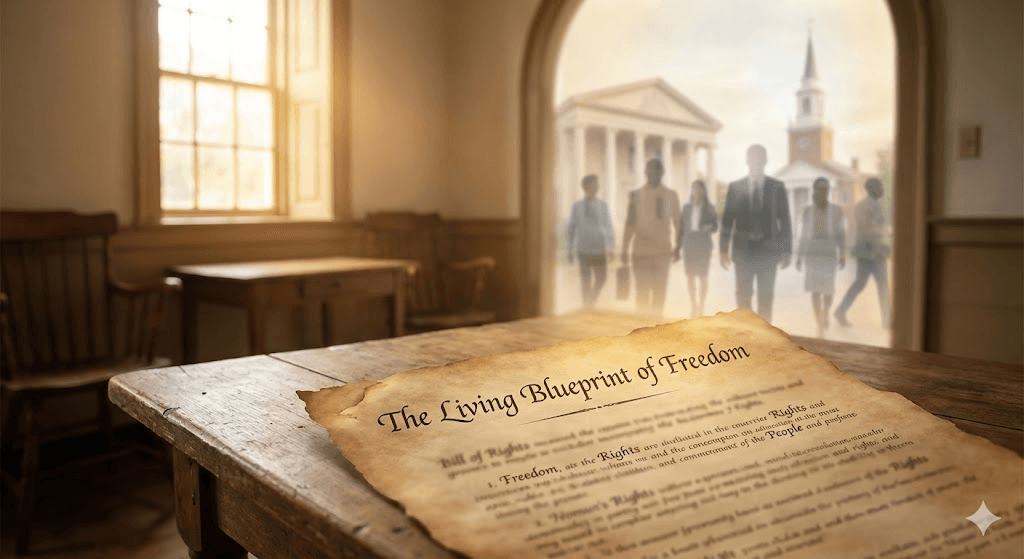
The blueprint for American freedoms was signed into law.
In December 1791, the United States ratified the Bill of Rights—ten amendments that would go on to define the relationship between citizens and their government.
At the time, the young nation was still an experiment, fragile and uncertain.
What the Bill of Rights offered was not perfection, but a promise: that individual liberties would be protected even as the country grew, changed, and argued with itself.
The Bill of Rights did something radical for its era.
Instead of granting power to rulers, it placed firm limits on them.
Freedom of speech, religion, and the press.
The right to assemble and petition.
Protection from unreasonable searches, excessive punishment, and forced self-incrimination.
These were not abstract ideals—they were guardrails, written in plain language, meant to be understood by ordinary people.
What made the Bill of Rights enduring was not just its content, but its intent.
It acknowledged that power naturally expands if left unchecked, and that a healthy society requires constant participation from its citizens.
Rights, after all, only matter if people are willing to exercise them, defend them, and pass them on.
Over time, the Bill of Rights has been tested in courts, challenged during crises, and reinterpreted through social change.
Each generation has had to decide what those freedoms mean in its own context—from newspapers to radio, from protest marches to digital speech.
The document itself did not change easily; instead, people changed around it, using it as both shield and compass.
That idea still resonates today.
Civic identity isn’t formed only by laws on paper, but by how communities engage with them—through dialogue, disagreement, service, and participation.
Voting, volunteering, attending meetings, speaking up when something feels wrong—these are modern expressions of the same principles set down in 1791.
The Bill of Rights reminds us that freedom is not passive.
It is practiced.
It lives not only in national history, but in everyday decisions made in neighborhoods, schools, and town halls across the country.
More than two centuries later, that blueprint continues to shape what it means to belong.
In recent years, various initiatives have sought to reinvigorate civic engagement, reflecting the enduring relevance of the Bill of Rights.
For instance, the Bill of Rights Institute has launched the MyImpact Challenge, a civic engagement contest encouraging students aged 13-19 to actively participate in their communities through service, volunteerism, or entrepreneurship.
State-specific versions of this contest, such as the Missouri MyImpact Challenge, offer students opportunities to showcase their projects and win prizes, fostering a new generation committed to civic involvement.
Educational programs also play a crucial role in promoting understanding of the Bill of Rights.
The National Archives' initiative, "Civics for All of US," offers interactive workshops for educators and students, focusing on the history and principles of the Constitution and the Bill of Rights.
These programs aim to strengthen civic understanding and encourage active participation in democracy.
Moreover, legislative efforts have been made to enhance civic education.
In Indiana, the passage of SB 211 established an Excellence in Civic Engagement designation for high school students, recognizing their commitment to civic activities and encouraging deeper involvement in democratic processes.
These contemporary efforts underscore the living legacy of the Bill of Rights.
They remind us that the freedoms enshrined in 1791 are not just historical artifacts but active principles that require ongoing engagement and defense.
As we navigate the complexities of modern society, the Bill of Rights continues to serve as both a foundation and a guide for American freedoms. |
0 Comments
Join the conversation
Be the first to comment
Share your thoughts above.