
The Day That Shaped the American Calendar: How FDR's Signature Unified Thanksgiving |
President Roosevelt's 1941 decision standardized Thanksgiving, transforming it into a national tradition. |
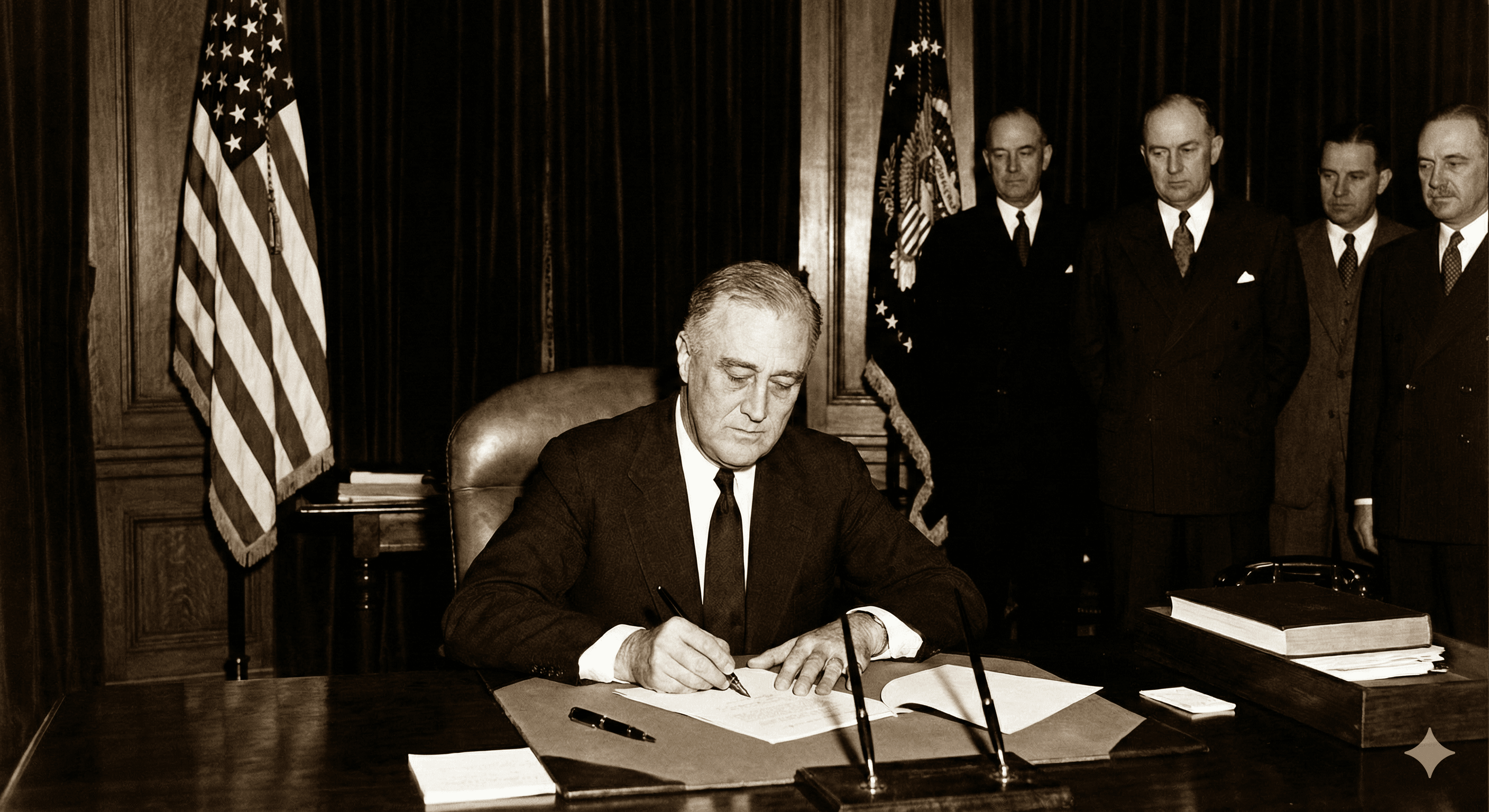
On December 26, 1941, President Franklin D. Roosevelt signed a bill that permanently set Thanksgiving as the fourth Thursday in November.
This move ended years of confusion and regional discrepancies, embedding the holiday firmly into the American calendar.
Prior to this legislation, Thanksgiving's date varied across states.
Governors selected different Thursdays, leading to a lack of uniformity.
In 1939, seeking to boost the economy during the Great Depression, Roosevelt moved Thanksgiving up by a week to extend the holiday shopping season.
This decision, dubbed "Franksgiving," sparked controversy and confusion, with some states adopting the new date and others sticking to tradition.
Recognizing the need for consistency, Congress passed a resolution in 1941, which Roosevelt signed into law, officially designating the fourth Thursday of November as Thanksgiving Day.
This standardization fostered national unity and allowed for synchronized celebrations across the country.
Today, Thanksgiving stands as a testament to this decision, serving as a time for Americans to gather, reflect, and express gratitude.
From traditional feasts featuring turkey and pumpkin pie to parades like the Macy's Thanksgiving Day Parade in New York City, the holiday has become a cornerstone of American culture.
In recent years, new traditions have emerged.
Some families are choosing to "adopt" turkeys instead of consuming them, reflecting a growing movement toward compassion for farm animals.
At sanctuaries like Luvin Arms in Erie, Colorado, people can sponsor turkeys by donating, receiving photos, certificates, and opportunities to visit the birds.
This shift from consumption to conservation highlights the evolving nature of Thanksgiving traditions.
Additionally, the cost of a traditional Thanksgiving dinner has seen changes.
In 2025, the American Farm Bureau Federation estimated the meal cost at $55.18, down 5% from the previous year and the lowest since 2021.
Despite the overall decrease, some items like frozen peas and sweet potatoes have become more expensive, reflecting the complexities of the current economic landscape.
As we approach Thanksgiving, it's essential to remember the historical decisions that have shaped this holiday.
Roosevelt's 1941 signature not only standardized a date but also reinforced a tradition that continues to bring Americans together in gratitude and unity. |
0 Comments
Join the conversation
Be the first to comment
Share your thoughts above.