
First Transatlantic Radio Signal: A Milestone in Global Communication |
Marconi's 1901 Breakthrough Paved the Way for Modern Connectivity |
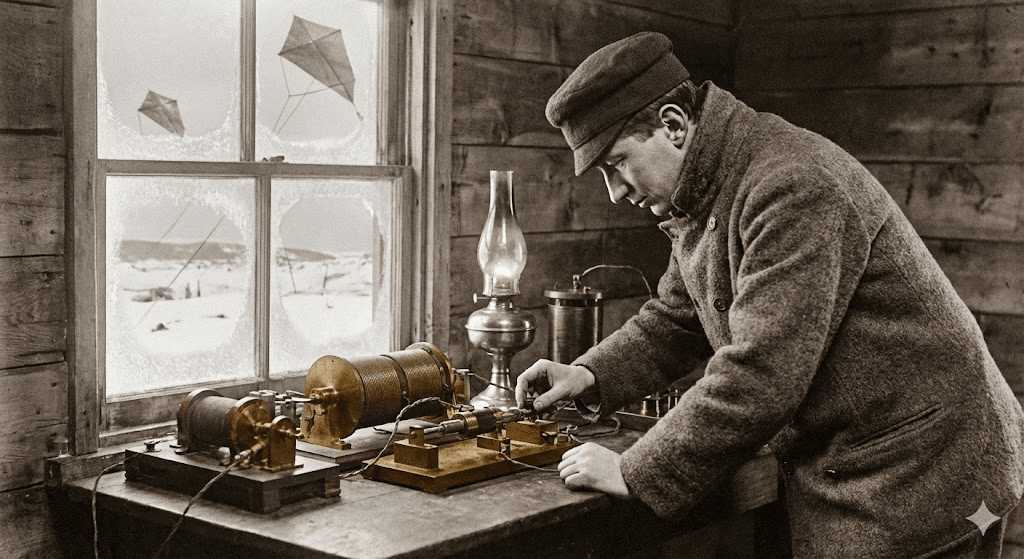
In December 1901, a groundbreaking event reshaped the landscape of global communication.
Guglielmo Marconi, an Italian inventor, successfully transmitted the first transatlantic radio signal, marking a significant milestone in the history of technology.
Prior to this achievement, long-distance communication was constrained by physical barriers and time delays.
Messages traversed oceans via ships and undersea cables, often taking days or weeks to reach their destinations.
Marconi's experiment changed this paradigm.
On December 12, 1901, he received the Morse code letter "S" at Signal Hill in St. John's, Newfoundland, transmitted from Poldhu, Cornwall, England.
This transmission spanned over 2,000 miles, defying skeptics who believed the Earth's curvature would impede such signals.
This historic event demonstrated that wireless communication could bridge vast distances, laying the foundation for the modern era of global connectivity.
It led to the development of radio broadcasting, maritime communication, and eventually, technologies like Wi-Fi and smartphones.
Marconi's success was not just a technological triumph but also a testament to human ingenuity and the relentless pursuit of innovation.
It underscored the desire to connect people across the globe, transcending physical and temporal limitations.
Today, as we enjoy instant communication worldwide, we owe a nod to that fateful day in 1901 when the first transatlantic radio signal was received, heralding a new era of global connection. |
0 Comments
Join the conversation
Be the first to comment
Share your thoughts above.